Are you bracing for that first hard freeze in Sparta? If you have barns, livestock, fences, or a well on your property, a few hours of prep can save you from costly mid‑winter repairs. You want your animals safe, your water flowing, and your fences holding strong when temperatures drop. This guide gives you a clear, Sparta‑ready checklist to winterize barns, fences, and water lines, plus a simple timeline so you know when to tackle each task. Let’s dive in.
Sparta winter basics: plan to local conditions
Sparta sits in Tennessee’s Upper Cumberland, where true winter freezes are part of the season. Elevation and hollows can create colder pockets, so one farm may see ice earlier than a neighbor. Use your own property history and official climate data together to plan timing.
Check local first and last freeze information through the National Weather Service and NOAA climate records. For livestock and farm facility guidance, the University of Tennessee Extension and the Tennessee State Climatologist provide regional best practices. For frost depth and any permit questions, contact the White County or City of Sparta building department before burying water lines or setting new posts.
Barn winterization checklist
Roof, gutters, and structure
- Inspect roofs for loose shingles or metal panels and repair any leaks before freeze‑thaw cycles make them worse.
- Clear gutters and downspouts so meltwater flows away instead of backing up and leaking into the building.
- Check flashing, skylights, and ridge caps for gaps that invite water and ice.
- Make sure doors roll or swing smoothly and latch securely to reduce cold air infiltration.
Doors, drafts, and ventilation
- Seal gaps around doors and windows with weatherstripping or temporary draft barriers.
- Maintain balanced ventilation. You need fresh air for animal health without direct drafts across stalls or bedding.
- Use temporary windbreaks where animals rest, and add bedding to reduce cold ground contact.
Heat and electrical safety
- If you use heaters, have units serviced and flues cleaned before the season. Install carbon monoxide detectors in enclosed spaces with combustion heat.
- Protect cords from animals and moisture, and use GFCI outlets where required.
- Avoid overloading circuits. Follow manufacturer instructions for all heating devices.
Water for livestock
- Insulate and heat vulnerable water lines inside the barn, focusing on water rooms and mechanical spaces.
- Consider frost‑free hydrants or heated automatic waterers designed for livestock.
- If using tank heaters or immersion heaters, follow manufacturer guidelines and use GFCI protection.
- Keep a backup water plan for power outages, such as a heated water chest or a hand‑fill system.
Quick pre‑freeze fixes
- Wrap exposed pipes with closed‑cell foam insulation; add thermostatic heat tape where needed.
- Partially close large barn doors to reduce cold air exchange while maintaining needed ventilation.
- Move portable waterers into protected enclosures and test float valves.
- Lay extra bedding and plan for increased feed needs during cold snaps.
Protect water lines and plumbing
Priorities by risk
- Bury water lines below local frost depth. Confirm depth with the White County building department before digging.
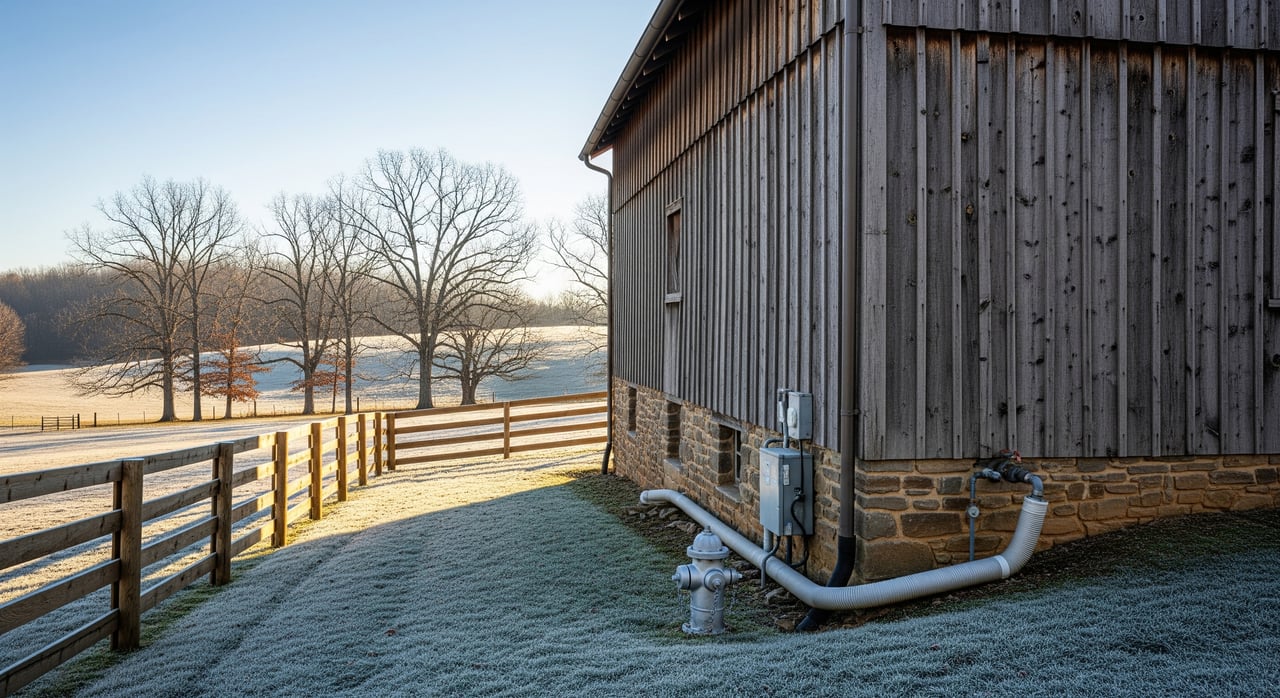
- Install frost‑free hydrants on lines you use all winter. Proper installation lets the hydrant drain below frost depth when shut off.
- Insulate indoor lines with pipe sleeves and valve jackets. Use heat cable on vulnerable runs and follow electrical codes.
Outdoor spigots and irrigation
- Locate interior shutoff valves to exterior spigots. Shut them off and drain the exterior side.
- Replace standard hose bibs with frost‑proof sillcocks where practical.
- Drain and blow out irrigation or washdown lines that will be idle in winter. Protect any backflow preventer with insulation or remove and store it dry.
Wells and hydrants
- Inspect wellheads and any pits or enclosures. Add insulation and ensure proper venting to prevent freezing and moisture buildup.
- Check wiring and piping to pressure tanks and pumps. Heat trace shallow components if needed and protect connections from weather.
- Verify that frost‑free hydrants drain properly and that the buried section is below frost depth.
Safe thawing steps
- If a pipe is frozen but intact, open nearby faucets to relieve pressure.
- Apply gentle, even heat with a hair dryer, heat gun at a safe distance, or thermostatic heat cable. Never use an open flame.
- If a pipe has burst, shut off the main water supply right away and call a licensed plumber.
- For buried or inaccessible lines, work with a well contractor or plumber.
What to keep on hand
- Pipe insulation in various diameters, valve jackets, and foam board.
- Thermostatically controlled heat tape rated for your use location and GFCI protection.
- Tank heaters or bucket heaters made for livestock.
- Basic plumbing tools, spare hose gaskets, and straps to secure hoses.
- A shovel to access buried shutoffs and a flashlight or headlamp for cold‑weather work.
Fence care before and during winter
Inspect and reinforce
Walk the perimeter in late fall. Check post plumb, braces, staples, fasteners, rails, and wire tension.
Tighten or re‑tension wire fences. Cold can slacken lines, so a fall tune‑up helps prevent mid‑winter sag.
Replace rotten end posts and braces. These carry the most load and are critical for line integrity.
For wood fences, apply preservative or stain before long wet spells, and trim overhead limbs that could fall on the line.
Winter quick fixes
- Install temporary braces on sagging gates and lubricate hinges.
- Keep heavy‑duty staples, wire ties, and a come‑along or wire tightener for field repairs.
- For electric fencing, test chargers and store spare batteries indoors to preserve capacity.
Livestock fence tips
- Add visibility markers to electric wires to reduce accidental damage from equipment.
- Stage temporary panels for fast containment if a line fails during a storm.
When to call a pro
- If many posts have heaved or rotated, or if you need new footings below frost depth.
- For high‑tensile systems requiring specialized tensioning or when heavy equipment is needed.
Timeline for Sparta properties
Use National Weather Service freeze data and your property’s past experience to set dates. Then follow this simple schedule.
6 to 8 weeks before average first freeze
- Inspect roofs, gutters, and downspouts on barns and outbuildings.
- Service heaters and ventilation devices. Test carbon monoxide detectors and GFCIs.
- Inspect and repair fence posts, end braces, and wire tension. Trim risky limbs.
- Inventory supplies: pipe insulation, heat tape, spare hinges and staples, tank heaters, extra bedding, and generator fuel.
2 to 3 weeks before expected freeze
- Wrap exposed water lines and install or test heat tape with GFCI.
- Drain and winterize irrigation and nonessential exterior lines and faucets.
- Move portable waterers indoors or into insulated shelters. Test frost‑free hydrants.
- Add extra bedding and confirm your feed supply.
48 to 72 hours before a hard freeze
- In hard‑to‑heat areas, allow a slow drip only where safe and permitted by your utility or septic guidance.
- Secure gates and reduce large openings while maintaining animal ventilation.
- Confirm generator readiness and fuel for pumps or heated waterers if outages are likely.
During a sudden freeze or emergency
- If pipes freeze and no burst is visible, apply safe, gentle heat and open faucets. If a burst is suspected, shut off the main and call a plumber.
- For frozen hydrants or waterers, use insulated portable water. Do not use open flames.
- For fence failures with livestock at risk, prioritize containment and safety. Use temporary panels or reroute animals to alternate paddocks.
Safety, permits, and insurance
- Electrical work for heat cables or permanent devices should comply with the National Electrical Code and local requirements. Consider licensed electricians for installations tied to fixed wiring.
- Replacing buried lines, installing frost‑proof hydrants, or adding permanent electrical heat trace can require permits. Contact the White County or City of Sparta building department.
- Review your homeowner’s or farm policy. Insurers often expect reasonable winterization efforts to reduce frozen pipe and water damage claims.
Ready to winterize with a local plan?
A little preparation now can protect your farm setup and give you peace of mind all winter. If you are planning a move, considering acreage, or weighing upgrades that support a hobby farm lifestyle, let’s talk about properties that fit your goals in Sparta and across the Upper Cumberland. Let’s Connect with Unknown Company.
FAQs
When to start winterizing in Sparta, TN?
- Begin major tasks 4 to 8 weeks before the average first freeze based on National Weather Service data and your property’s past freeze history.
How deep to bury water lines in White County?
- Verify the adopted frost depth with the White County or City of Sparta building department, and follow local utility requirements or consult a licensed plumber.
Will frost‑free hydrants stop all freezing?
- They prevent freezing when correctly installed below frost depth and allowed to drain back, but downstream lines can still freeze if unprotected.
Is regular foam pipe insulation OK outdoors?
- Use insulation rated for exterior exposure and protect it from UV and moisture; combine with thermostatic heat tape on high‑risk runs.
What is the safest way to thaw a frozen pipe?
- Open nearby faucets and apply gentle heat with a hair dryer, heat gun at a safe distance, or thermostatic heat cable; shut off water and call a plumber if you suspect a burst.